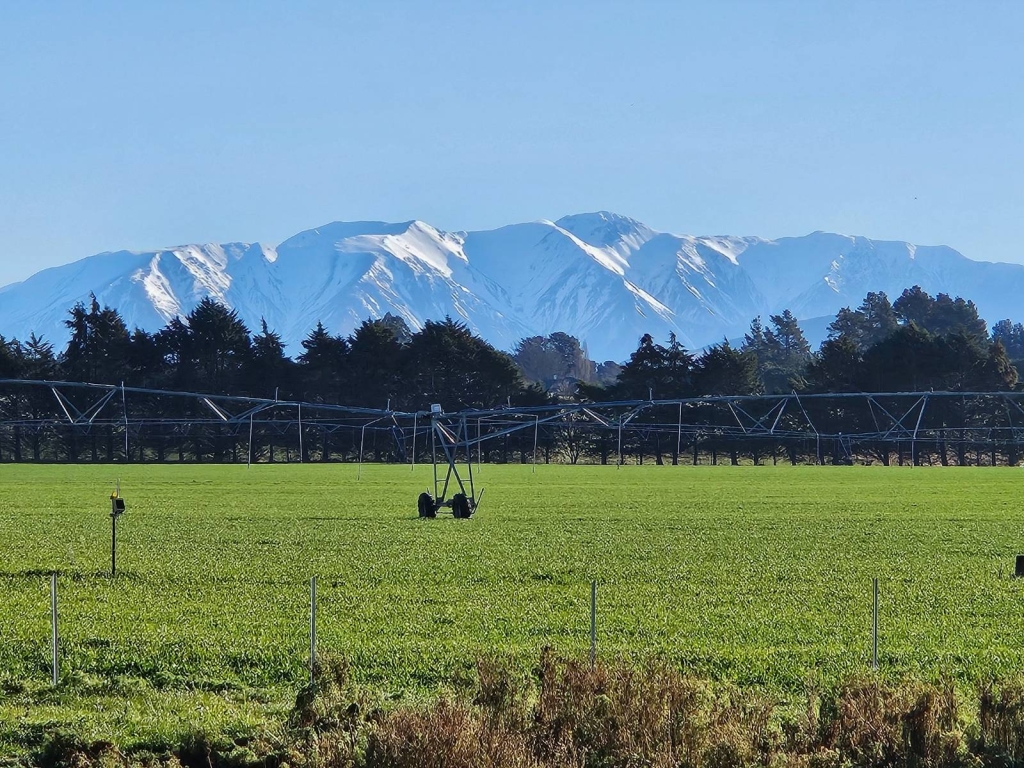
Water Use on the Canterbury Plains
Water is one of the most important inputs on any farm. For leaf crops, it has a direct effect on growth, colour and yield.
It is also a shared resource. On the Canterbury Plains, farms, towns and rivers all depend on the same rivers and groundwater. How we use water matters to our neighbours, to the environment and to our customers.
Here is how water is managed across our four farms.
Why water matters for leaf crops
We harvest young, green leaf. A healthy leaf crop needs steady moisture during its six to eight week growing cycle. If plants are stressed by drought, growth slows and leaf quality can suffer.
Consistent moisture supports consistent crops. Consistent crops support consistent powder, batch after batch.
Irrigated and dryland farms working together
Not all of our farms are irrigated. Harts Creek and Willowmere are irrigated farms. Greendale and The Downs are dryland farms that rely on rainfall.
This mix reduces our total demand for irrigation water. It also spreads risk. In a wet season, our dryland farms perform well. In a dry season, our irrigated farms help keep supply steady.
River water from the Southern Alps
Willowmere Farm, near Hororata, is owned by Rob, one of our grower-directors. It receives its irrigation water from the Central Plains Water scheme, the largest irrigation scheme in the South Island.
The scheme takes water from the Rakaia River, which flows from the Southern Alps. When the river is low, it uses water stored earlier in Lake Coleridge. This means irrigation can continue without reducing the river below its protected minimum flows.
Water reaches the farm gate through an underground, pressurised pipeline. According to Central Plains Water, its shareholders use about 2% of the Rakaia River's yearly flow.
Taking pressure off groundwater
Before schemes like Central Plains Water, many Canterbury farms irrigated from wells. Large groundwater takes can lower aquifer levels over time.
Central Plains Water was designed to replace a large share of these groundwater takes with alpine river water. For Willowmere, this means irrigation comes from a monitored river supply, not from local wells.
Measured, monitored and audited
Irrigation in Canterbury is regulated. Central Plains Water monitors its river take every 15 minutes, every day, and reports to the regional council each year.
Every farm that uses scheme water must also have a farm environment plan. This covers how water and nutrients are managed across the whole property. A reliable supply also helps the grower apply water when the crop needs it, not too early or too late.
Healthy soil holds more water
Organic farming builds soil organic matter through crop rotation, cover crops and compost. Soil with more organic matter holds water better. This helps crops make better use of rainfall and irrigation.
As a certified organic grower (BioGro #5690), we do not use synthetic fertilisers or synthetic pesticides. This reduces the risk of these inputs reaching groundwater and streams.
Caring for waterways
At Harts Creek, stream restoration and dedicated biodiversity areas are an integral part of the property. Willowmere also has planted biodiversity areas. These areas provide habitat, help filter run-off and support the health of local waterways.
Why this matters to ingredient buyers
Many brands now report on the environmental impact of their supply chains. Knowing how your ingredients are grown, including where the water comes from, supports that reporting.
If you would like more detail on our farming practices for your sustainability documentation, contact our team. We are happy to help.



Leave a Reply
Want to join the discussion?Feel free to contribute!