Reading a Certificate of Analysis
A certificate of analysis, or CoA, is one of the most useful documents an ingredient supplier can give you.
It tells you what a product is tested for and the limits it must meet. It is different from a marketing description. A CoA gives you measurable values you can check against your own specifications.
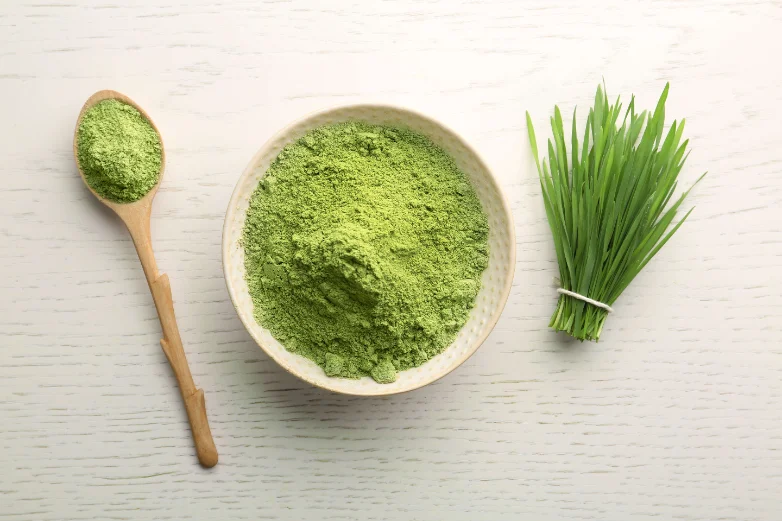
At Folium Organics, a CoA is available with every shipment. Here is how to read one, using our Certified Organic Barley Grass Powder as an example.
Start with the product details
Check the top section first. Our CoA shows:
- Product name and botanical name, for example Barley Grass Powder (Hordeum vulgare)
- Country of origin: New Zealand
- Organic certification: BioGro licence #5690
- Form and type: leaf, powder
Then check the batch number, manufacturing date and best-before date. Make sure the batch number on the CoA matches the batch number on your cartons. If they do not match, the document does not apply to your product.
Physical properties
This section describes how the powder looks and behaves.
Particle size. This shows how finely the powder is milled. Our CoAs report the average particle size, which is around 70 to 75 microns depending on the product. Particle size affects how the powder mixes in water, how it feels in the mouth, and how it runs through capsule and tablet equipment.
Moisture. Our barley grass powder has a moisture content below 4%. Low moisture helps the powder stay stable and free-flowing in storage.
Water activity. This is different from moisture. It measures how much water is available for microbes to use. Our limit is below 0.600. Most bacteria, yeasts and moulds cannot grow below this level, so it is a good indicator of shelf stability.
Appearance, aroma and taste. For leaf powders, these are descriptions. Ours reads "dark to light green powder", with an aromatic, characteristic aroma and taste. Natural colour can vary slightly between seasons and harvests.
Microbiological results
These tests check for microorganisms. Our standard microbiological tests and limits include:
- Aerobic plate count: below 300,000 cfu/g
- Yeasts and moulds: below 1,000 cfu/g
- Coliforms: below 23 MPN/g
- E. coli: below 3 MPN/g
- Salmonella: not detected
- Listeria: not detected
Read each result next to its limit. "cfu/g" means colony forming units per gram. "MPN/g" means most probable number per gram. Pathogens such as Salmonella and Listeria should always be reported as "not detected".
Gentle drying soon after harvest, followed by low moisture and low water activity, helps keep microbial counts low.
Additional testing
Some buyers need extra results. Examples include heavy metals, such as lead, cadmium, arsenic and mercury, or pesticide residue screening for specific markets.
These tests are not part of our standard CoA. We can arrange additional testing at the buyer's expense. Tell us which tests your market requires when you place your order.
Compare CoAs over time
One CoA tells you about one batch. Several CoAs tell you about a supplier. If you buy regularly, keep each CoA and compare results across batches. Consistent moisture, particle size and microbiological results show a stable process.
What a CoA does not tell you
A CoA covers one batch at one point in time. It does not describe the whole quality system behind the product.
For that, look at the supplier's wider controls. At Folium, our plant operates under a HACCP-based food safety plan. Packed product goes through X-ray screening to detect foreign material. Every batch is traceable through harvest, drying, milling and packing, and our organic system is certified by BioGro (#5690).
Request a sample CoA
If you are evaluating organic leaf powders, ask to see a CoA before you order. We can provide sample certificates of analysis, technical specifications and certification documents for all seven of our powders. Contact our team to request them.


Leave a Reply
Want to join the discussion?Feel free to contribute!